What to look for in a mango protein bar
Mango should taste bright and aromatic. It should not disappear behind vanilla or read as generic tropical sweetness.
By Sravanti Balaji · 5 minute read
Mango flavor has to survive the format
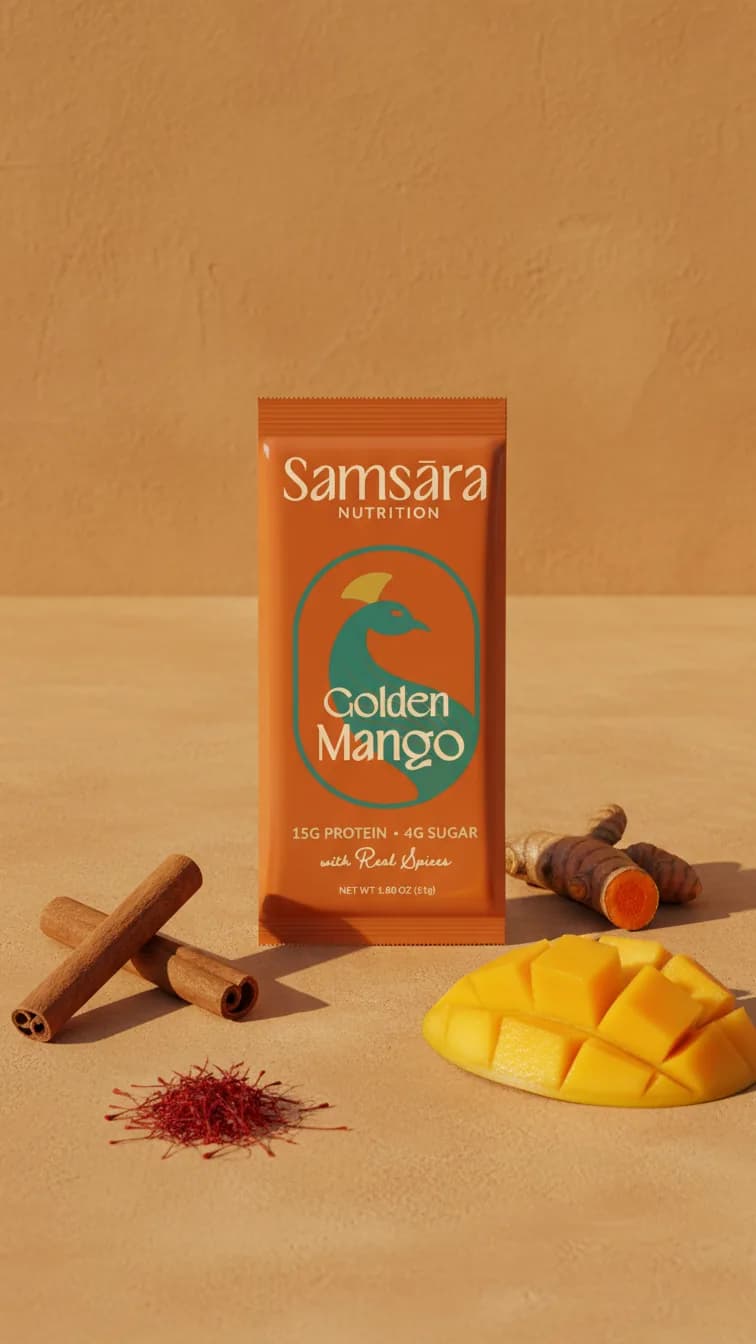
Fresh mango is juicy, floral, tart, and sweet at once. A shelf-stable protein bar cannot copy that texture, but it can preserve the fruit’s aroma and brightness.
Look for mango in the ingredient list and pay attention to what surrounds it. Too much vanilla can blur the fruit. A little acidity can sharpen it, while coconut can carry the creamy side of ripe mango.
Why Golden Mango uses coconut and turmeric
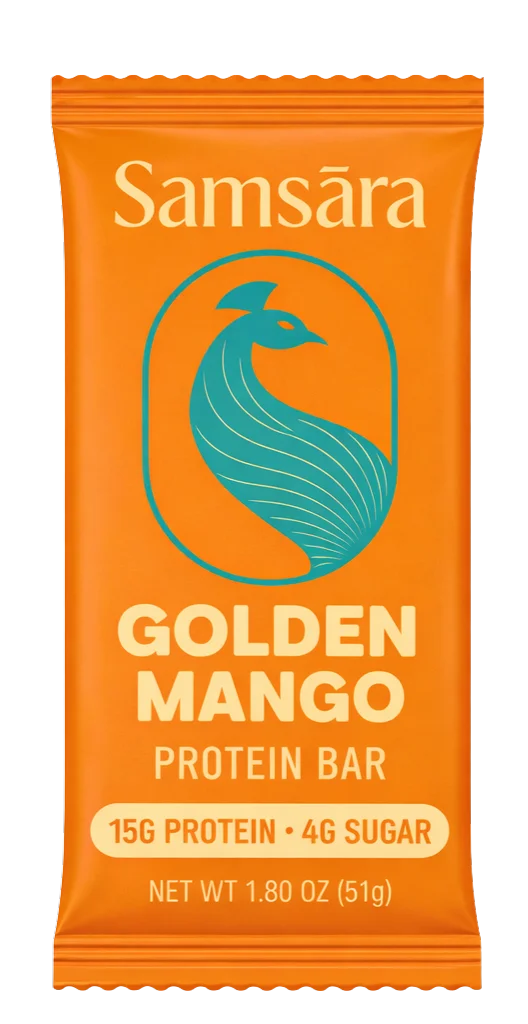
Samsāra Golden Mango uses mango powder for the fruit center and coconut for a rounder texture. Turmeric adds an earthy note and reinforces the golden color without turning the bar into a turmeric snack.
The goal is contrast: bright fruit, creamy coconut, a quiet earthy finish, and enough salt to keep the sweetness from becoming one-dimensional.
Read the whole panel
Fruit in a product does not automatically tell you its nutrition. Check the serving size, total sugar, added sugar, protein, fiber, and allergens together. Golden Mango has 15g protein, 7g fiber, and 4g sugar, and contains milk and almond.
The complete ingredient list and FDA-style nutrition panel live on the product page, so you do not have to make a decision from front-of-pack claims alone.
Who usually reaches for mango first
Mango is a good starting point if most protein-bar flavors feel brown, heavy, or dessert-like to you. It brings fruit to a category dominated by chocolate, cookie, and nut-butter profiles.
Try it chilled if you prefer a firmer bite, or at room temperature for a softer texture and a more noticeable aroma.
Put the guide to use.
See full ingredients, nutrition panels, allergens, and current pricing before you choose.
Shop Golden Mango